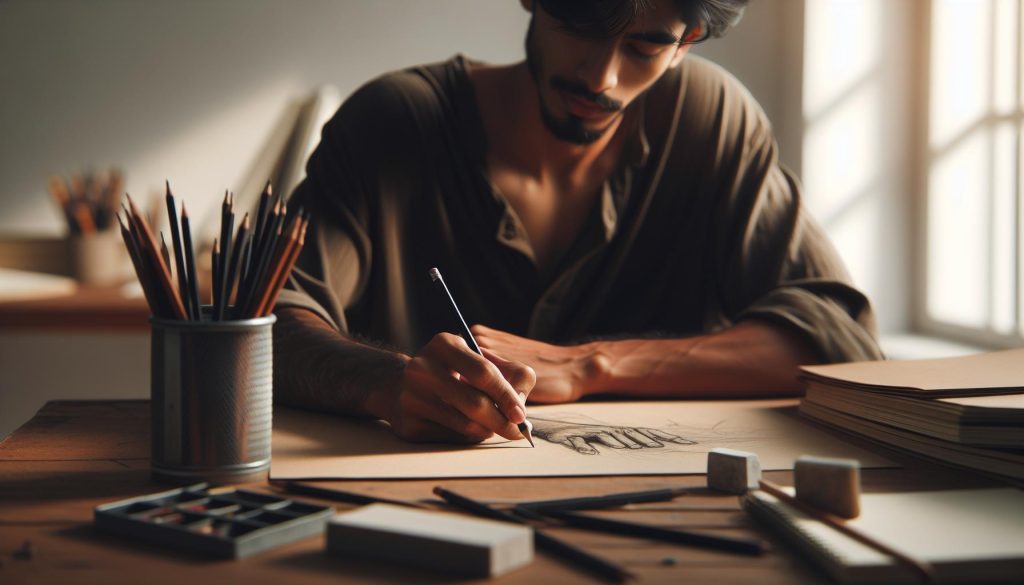
Mastering line work in drawing is fundamental to artistic growth, yet many art students struggle to hone this crucial skill. Did you know that effective line work can transform a simple sketch into a captivating piece of art? This guide will explore practical techniques for practicing line work, allowing you to enhance your drawing repertoire and expressiveness. Whether you’re looking to refine your outlines, improve fluidity, or understand the emotional weight of different lines, you’ll find valuable insights here. Understanding the subtleties of line work can unlock your potential as an artist, making it easier to convey ideas and emotions effectively on paper. Join us on this journey to build confidence and skill in your drawing practice, as we equip you with the tools necessary for your artistic development and career aspirations.
The Importance of Line Work in Drawing

Drawing is an art form that hinges significantly on the quality and precision of line work. This fundamental aspect of drawing serves not only as the backbone of any piece but also as a primary vehicle for conveying mood, structure, and movement. Effective line work can evoke emotions, create dynamic compositions, and give life to characters and environments. The ability to manipulate lines-through varying thickness, length, and texture-allows artists to create a narrative and emphasize themes within their work, making it an indispensable skill for any aspiring artist.
When practicing line work, it’s essential to focus on quality over quantity. Start with basic exercises that involve drawing straight and curved lines consistently and with confidence. As you progress, experiment with different types of lines-like dashed, dotted, or textured-to learn how each impacts the overall composition. Keep in mind that the pressure applied to your medium can drastically change the outcome; lighter touches yield finer lines, while stronger pressure results in more pronounced and powerful strokes. This manipulation of line is what differentiates amateur sketches from professional artwork.
Moreover, line work is vital in defining shapes and creating depth. Consider the way shadows and contours influence how we perceive three-dimensional forms on a two-dimensional surface. Using techniques such as hatching, cross-hatching, or stippling can add significant texture and dimension to your work. These skills not only enhance your drawing but also prepare you for more complex techniques and styles.
As you refine your line work, remember to seek constructive feedback and be open to guidance from peers and instructors. This iterative process of creation and critique fosters a better understanding of your artistic voice and aids in skill development. Embrace the journey of mastering line work, as it lays the foundation for all your future artistic endeavors and enhances your confidence in pursuing a career in the arts. Through dedication and continual practice, you’ll find that line work not only enhances your technical abilities but also enriches your creative expression.
Fundamental Techniques for Mastering Line Quality
Mastering line quality is essential for any artist who wishes to develop their drawing skills. The subtleties of line work can dramatically alter the perception and emotional impact of a piece. By focusing on the fundamental techniques for achieving impeccable line quality, artists can enhance their ability to convey mood, structure, and detail in their work.
To begin, it’s crucial to develop a steady hand and confidence in your strokes. One effective method is to practice drawing straight lines, curves, and circles in various sizes. Utilize different tools-such as pencils, pens, or brushes-to experience how each medium affects line quality. For instance, a pencil allows for softer, more subtle lines, whereas a pen can deliver bold, sharp strokes. Recognizing these nuances will enable you to choose the right instrument for the desired effect in your artwork.
Another key technique is to vary line weight intentionally. Lines can be thick or thin, heavy or light, depending on the emotional tone required. For instance, a thick, bold line might be used to emphasize a boundary or enhance the drama of a character, while a delicate line could suggest fragility or detail. Engage in exercises where you create a single drawing using varied line weights to see how they can guide the viewer’s eye and influence the mood. Incorporating techniques like hatching or stippling allows for additional dimension and texture, further elevating the depth of your work.
Finally, don’t underestimate the importance of observation and feedback. Regularly study the line work of artists you admire, breaking down what makes their techniques effective. Opt for peer critiques in your classes or online communities to gain insights on your line work. This iterative approach not only improves your technical skills but also builds your confidence, ultimately enhancing your artistic journey and developing a unique style that resonates with you. By committing to these foundational techniques, you’ll find that your ability to express ideas and emotions through line work will grow immensely, making a significant impact on your artistic development.
Exploring Different Line Types and Their Uses

The variety of lines an artist can use is akin to a vocal range in music; each type contributes its unique character and emotional tone to a piece. Understanding different line types is essential for conveying specific moods and meanings in your artwork. By mastering these variations, you’ll enhance your versatility and expressiveness, allowing your drawings to resonate more deeply with your audience. Let’s delve into some fundamental line types and their distinct uses.
Types of Lines
- Straight Lines: Often associated with clarity and precision, straight lines can convey structure and stability. They’re used prominently in architectural drawings and landscapes to suggest formality and order.
- Curved Lines: These lines add a sense of dynamism and fluidity to your work. Curved lines often create a softer, more inviting atmosphere and can suggest movement or emotion, making them ideal for figure drawing or organic shapes.
- Diagonal Lines: Diagonal lines evoke a sense of tension or energy. They can draw the viewer’s eye across the composition and suggest action or instability, commonly found in dynamic poses or dramatic scenes.
- Implied Lines: These lines aren’t physically drawn but suggested through the arrangement of elements in a composition. They guide the viewer’s attention and create connections between objects, enhancing the storytelling aspect of your work.
- Hatching and Cross-Hatching: These techniques involve creating patterns of parallel lines or intersecting lines to suggest shading and texture. They can add depth and contrast, helping objects appear three-dimensional.
- Broken Lines: These lines convey a sense of fragmentation or discontinuity. They can highlight the concept of movement or change, making them powerful in conceptual artwork.
Each type of line serves a purpose and can be strategically used within your drawings to enhance storytelling and emotional impact. Engage in exercises where you deliberately use different lines to see how they influence your artwork’s mood. For instance, create a series of sketches where you express the same subject using only straight lines in one and curved lines in another, and observe how this changes the viewer’s perception.
The practice of exploring various line types not only enriches your technical skills but also ignites your creativity. As you experiment, you’ll find a newly discovered freedom in how you express ideas and emotions through your drawings. This exploration cultivates a personal style that reflects your artistic identity, crucial for your growth as an artist and your eventual career in the arts. With every stroke, you’re not just making marks on paper but also communicating your unique perspective to the world. Keep experimenting and embracing different line types as you refine your artistic journey.
Step-by-Step Guide to Practicing Line Work

To truly develop your skills in line work, systematic practice is essential. Each stroke you make helps build your hand-eye coordination and understanding of how different lines can convey emotions and shapes. Here’s a straightforward approach to elevate your line work and enhance your drawing capabilities.
Start by gathering the right tools. A variety of pencils (ranging from hard to soft), ink pens, or fine liners will allow you to explore different line qualities. You can also experiment with brush pens for a more fluid line or charcoal for dramatic effects. Next, set aside dedicated practice time in a distraction-free environment. Aim for short, regular sessions, such as 15-30 minutes daily, focusing exclusively on line work exercises.
Begin with basic exercises that emphasize control and consistency. For example, fill an entire page with straight lines of varying lengths and angles. Then, move on to curved lines, focusing on making them smooth and continuous. Pay attention to your line weight by varying pressure; this will help you understand how subtle changes can convey different feelings.
Once you’re comfortable with basic lines, introduce hatching and cross-hatching techniques. Create sections in your sketchbook to practice these methods, gradually increasing complexity to suggest shadow and depth. Don’t shy away from drawing geometric shapes and organic forms; practice first by outlining them with these lines before adding details.
Finally, challenge yourself with a drawing assignment: select a simple object and experiment with different line types to capture its essence. This not only solidifies your understanding of line quality but also integrates it into your overall drawing style. Make sure to document your progress and reflect on what works well and what doesn’t. Continuous practice, along with an open mindset to critique your work, will significantly improve your artistic abilities. Remember, perfecting your line work is a journey; enjoy the process and let your unique artistic voice shine through every stroke you make.
Creative Exercises to Enhance Line Control
Creating lines with precision and control can significantly elevate your drawing skills, transforming basic sketches into expressive pieces of art. Engaging in creative exercises designed to enhance line control is crucial for any aspiring artist. These activities will not only sharpen your technique but also instill confidence in your artistic abilities.
Start your practice with line drills. Create a series of shapes, such as circles, squares, and triangles, and focus on using only straight or curved lines to fill these forms. Set a timer for 10 minutes and see how many clean shapes you can create without lifting your pencil. This exercise enhances muscle memory, teaching your hand to reproduce lines consistently.
Next, incorporate dynamic line exercises into your routine. Use a sketchbook to create a continuous line drawing of a still life or an object from different angles. The goal is to keep your pencil on the paper without lifting it while altering the pressure to create varying line thickness. This method is excellent for building fluidity in your strokes while simultaneously developing confidence in your observation skills.
Finally, explore experimental line work by attempting to draw with your non-dominant hand. This whimsical challenge encourages you to break free from familiar patterns and discover new ways of approaching line creation. Alternatively, use various drawing tools-like a paintbrush, marker, or even a digital stylus-to create line work. Each tool offers a unique texture and feel, broadening your understanding of line quality and control.
By weaving these exercises into your practice sessions, you will cultivate stronger line control, leading to more expressive and compelling artwork. Remember, the journey of mastering line work requires patience and dedication. Each drawing becomes a stepping stone toward refining your artistic voice and style. Embrace these challenges; they will not only enhance your skills but also invigorate your passion for art.
Using Line Work to Create Texture and Depth
Creating texture and depth through line work can vastly enhance the visual impact of your drawings, transforming flat images into dynamic compositions that seem to leap off the page. One of the most effective ways to achieve this is by varying the weight, direction, and style of your lines. This not only adds interest but can also subtly guide the viewer’s eye throughout the artwork. By mastering these techniques, you will not only demonstrate your drawing skills but also develop a unique voice and style.
To begin, consider employing hatching and cross-hatching techniques. Hatching involves drawing a series of parallel lines to create the illusion of shading, while cross-hatching adds another layer of lines at angles. This method is particularly effective for adding depth to shadows or depicting the contours of a subject. For instance, when drawing a spherical object, use closer lines in the darker areas and spread them out as you move towards the highlights. This contrast creates a believable three-dimensional form.
Additionally, you can explore the use of contour lines. These lines trace the edges and the shapes of your subjects, helping to define their form and mass. By varying the pressure of your pencil or pen, you can create dynamic contours that suggest depth; a heavier line can indicate shadowy areas, while a lighter line can enhance delicate aspects of your drawing. Implementing this technique can be particularly satisfying when drawing natural forms, such as trees or mountains, where lines can help convey the rugged texture of bark or the softness of foliage.
Finally, embrace implied lines, which guide the viewer’s gaze and create connections between different elements within your artwork. These lines can be subtle, formed by the arrangement of objects, the direction of shadows, or even the way your subject is posed. By consciously directing the viewer’s eye, you create a more engaging visual narrative that actively invites contemplation.
By consistently integrating these techniques into your practice, you not only enhance your drawing’s texture and depth but also cultivate your personal artistic style. As you experiment and refine your skills, remember that each stroke contributes to your development as an artist, enriching both your confidence and your portfolio. Keep pushing the boundaries of your creativity, and don’t shy away from challenges-they’re the catalysts for your growth in the artistic journey.
Incorporating Line Work into Your Artistic Style
In the intricate realm of drawing, mastering line work is not just a technical skill-it’s a vital aspect of developing a personal artistic style that communicates your unique vision. As you incorporate line work into your art, it becomes a powerful tool for expression, enabling you to convey emotions, themes, and narratives with clarity and impact. One compelling approach is to experiment with various weights and textures in your lines, allowing them to evoke different feelings within your artwork. For instance, bold, dark lines can convey strength and confidence, while lighter, softer lines can suggest delicacy and fragility.
The incorporation of line work can also reflect the influences you admire in other artists. A great way to establish your style is by studying the line work of artists who inspire you. Observe how they use line to define shapes, create movement, and represent textures. As you analyze their techniques, consider what resonates with you and how you can adapt these elements to fit your personal practice. Try creating your pieces using a similar approach to their line work, then gradually step away to infuse your flair, which will lead to an original style that is distinctly yours.
Another effective strategy is to create a series of works that focus explicitly on varying your line work. This could involve drawing the same subject multiple times, each time with different line techniques-hatching, cross-hatching, or stippling. Such exercises not only deepen your understanding of how lines affect composition and emotion but also help you develop a visual vocabulary that can be seamlessly integrated into your artwork. Remember, the goal is to find combinations that feel true to you while maintaining the versatility to adapt as you grow.
Utilizing line work isn’t limited to aesthetic decisions; it can enhance storytelling elements in your pieces. When you apply line techniques deliberately, you guide the viewer’s gaze and help tell the story behind your artwork. Create dynamic compositions where line leads the eye from one focal point to another, allowing the narrative to unfold organically. By honing these methods, you not only refine your skills but also instill a confidence that will radiate through your portfolio, boosting your prospects in a competitive art world. Embrace the journey!
Common Mistakes in Line Work and How to Fix Them
Common mistakes in line work can hinder an artist’s ability to convey their vision effectively, but identifying and correcting these issues can lead to significant improvement. One common pitfall is inconsistent line weight. Lines that vary dramatically in thickness may create an unbalanced composition, making it difficult for the viewer to focus on the intended subject. To fix this, practice drawing with different tools that naturally produce varying line weights, such as pens or brushes, and consciously decide which areas require emphasis. For instance, thicker lines can define the primary subject while thinner lines can add detail and texture to the background.
Another frequent error is the overuse of straight lines in compositions that require more organic shapes. This can result in a piece that feels rigid and unnatural. Instead, it’s crucial to incorporate curves and varied line directions to add fluidity and life. Start by sketching freely with your wrist rather than your fingers, allowing your lines to mimic the natural curves found in the subject matter. For example, when drawing a human figure, emphasize the curvilinear shapes of the body to create a more dynamic and engaging representation.
A lack of variation in line techniques can also result in monotonous artwork. Relying solely on a single style can make the work feel flat. To counter this, experiment with diverse line techniques such as hatching, stippling, or cross-hatching. Create exercises focused on practicing these techniques, which will expand your visual vocabulary and enhance your ability to convey emotion and depth. For instance, applying hatching for shadows while utilizing stippling to indicate texture can create a striking contrast in your drawings.
Finally, many artists struggle with the application of line work in conveying depth and space. This often leads to a flat appearance in their pieces. To address this, practice using line direction and spacing strategically. Lines that converge towards a vanishing point can create perspective, while varied spacing between lines can indicate proximity or distance within a scene. Drawing landscapes, for example, requires an understanding of how lines and shapes overlap to create layers of depth. Ensure you’re regularly studying perspective techniques and applying what you learn to enrich your compositions.
By recognizing and addressing these common mistakes, artists can enhance their line work, ultimately leading to more expressive and compelling artwork. Embrace the learning process, and remember that every error is a stepping stone towards mastery. With dedication and practice, each artist can refine their skills and develop a signature style that resonates with their audience.
Advanced Line Techniques for Skilled Artists
Mastering advanced line techniques is essential for artists looking to create dynamic and engaging work. Developing a sophisticated understanding of how line quality affects the overall composition can elevate your art from basic to breathtaking. One powerful technique is to emphasize line weight strategically. By varying line thickness, you can guide the viewer’s eye through your artwork and create a focal point. For instance, using a thicker line to outline the main subject and thinner lines for background elements can establish a clear hierarchy and enhance visual interest.
Another approach involves the quality of your line. Experiment with different tools-like fine-tipped pens, brushes, or digital styluses-to discover how each affects the feel of your lines. Combining smooth, flowing lines with jagged, expressive strokes can invoke contrasting emotions and add expressiveness to your pieces. When drawing landscapes, for instance, use fluid lines for gentle curves of hills but opt for harsher, broken lines for jagged mountain edges. This contrast can create depth and push forward the elements of your composition.
Utilizing Line Dynamics
Understanding line dynamics is critical for conveying movement and energy. Techniques such as gestural drawing can help you capture the essence of motion. Rather than focusing solely on the accuracy of your lines, allow your hand to move freely, creating loose sketches that embody the action of your subject. This technique not only enhances your ability to depict dynamic poses but also cultivates a lively drawing style that engages your audience.
Consider integrating varied line patterns into your work, such as stippling or cross-hatching, to develop tone and texture. These techniques can add dimension, particularly in areas requiring shading or depth. For instance, using cross-hatching in shadowed regions while applying a stippling technique for texture on a surface creates a rich contrast that attracts attention. Challenge yourself to combine various line styles within a single artwork, helping to create a more intricate and diverse visual language.
Ultimately, advancing your line work is a journey of exploration and practice. Each new technique you master contributes to your artistic toolkit, allowing you to express yourself more fully across various mediums, whether traditional or digital. Keep pushing your boundaries, experiment with diverse styles, and remember: every stroke is an opportunity for growth. Embrace the learning process, and let your evolving skills redefine your artistic voice.
Line Work in Digital vs. Traditional Drawing
In the increasingly interconnected realm of art and technology, the choice between digital and traditional drawing methods can significantly impact your line work. Each approach has its unique advantages and challenges, shaping not only the outcome of your artwork but also your personal development as an artist. Embracing both mediums allows for a more versatile artistic voice, enabling you to convey your ideas in diverse ways.
When working traditionally, artists often cherish the tactile experience of pencil on paper or the smooth application of ink. The direct feedback from physical materials can hone your line control and encourage a deep connection with each stroke. Techniques such as varying pressure to change line weight or manipulating blending with colored pencils can lead to masterful shading and texture effects. To practice line work effectively in this medium, consider the following:
- Experiment with different tools: Try pencils, pens, and brushes to see how each affects your lines.
- Focus on line dynamics: Practice gestural drawing to enhance fluidity and expressiveness.
- Incorporate techniques like cross-hatching: Use these to add depth and dimension to your work.
Conversely, digital drawing opens up a world of possibilities with tools that allow for effortless edits and versatility. Software applications like Adobe Photoshop or Procreate offer a range of brushes that can simulate nearly every traditional drawing tool, while also providing features like layers and undo functions that encourage experimentation without the fear of making permanent mistakes. Here’s how you can leverage digital tools for line work:
- Utilize pressure sensitivity: Many styluses allow for line weight variation, which can replicate natural line dynamics.
- Explore brush customization: Create or download brushes that emulate traditional media for a mix of styles.
- Practice layering: Use layers to separate line work from color and shading, giving you more control over each element.
Ultimately, the decision between traditional and digital drawing does not have to be binary; many artists find that their best work comes from a fusion of both worlds. Embrace the strengths of each method, and consider how they might complement your ongoing skill development. Whether you are pursuing part-time internships to strengthen your portfolio or working freelance to build a diverse body of work, your experience with both mediums will provide you with unique insights and flexibility in your artistic journey.
Building a Line Work Portfolio for Art Students
Building a strong portfolio focused on line work is essential for art students aiming to showcase their skills and creativity. A thoughtfully curated collection of your line drawings will not only demonstrate your technical proficiency but also reflect your personal artistic voice. Start by selecting a variety of pieces that highlight different styles and techniques you’ve mastered, such as cross-hatching, contour drawing, and varied line weight. This diversity will captivate potential employers or clients who seek a well-rounded artist.
As you compile your portfolio, consider organizing it thematically. You might create sections for different types of line work, such as illustrative designs, character sketches, and more abstract interpretations. Each section should showcase your best work, accompanied by a brief description of the techniques used and the creative process behind each piece. This context enriches the viewer’s understanding and appreciation of your art, making your portfolio not just a collection of images, but a narrative of your development as an artist.
To expand your portfolio further, don’t hesitate to incorporate feedback and critiques from peers or mentors. Engaging in discussions about your work can offer new insights and perspectives that enhance your art. Additionally, participating in community art exhibits or online platforms can help gain visibility. Consider sharing your portfolio on social media or art-focused sites like Behance, allowing you to reach a broader audience and attract potential internships or freelance opportunities.
Lastly, as you prepare to enter the job market, adapt your portfolio for various roles. Tailor it to suit specific applications, emphasizing relevant works that align with the job description. Whether you’re applying for a position as a graphic designer, illustrator, or fine artist, ensuring that your portfolio speaks to the needs of hiring managers will set you apart. A polished, approachable portfolio combined with a strong online presence can significantly increase your chances of landing ideal opportunities as you progress in your artistic career.
Finding Inspiration: Artists Who Excel in Line Work
Exploring the artistry of line work can be a transformational journey for budding artists, as it lays the foundation for both technical skills and personal expression. Great artists often draw inspiration from others who have mastered line work, showcasing diverse techniques and styles that can fuel your creative process. By examining the works of prominent artists known for their exemplary line work, you can gain invaluable insights and ideas for your own practice.
One inspiration is Hokusai, who is famed for his dynamic woodblock prints and intricate line drawings. His pieces, which often depict waves and other elements of nature, showcase how line can convey movement and emotion. Notably, Hokusai’s attention to varying line weights can teach you how to create depth and dimension within your own sketches. Similarly, Alfonso Mucha employed ornate lines in his Art Nouveau style, demonstrating how the flow of lines can enhance aesthetic appeal and narrative in a single artwork. Analyzing their work can ignite ideas about how you can apply similar techniques to your drawings.
To find your own artistic voice, immerse yourself in the works of contemporary artists as well. Sofia Bonati, for instance, skillfully merges line work with color and patterns, pushing the boundaries of traditional drawing. Following her work can inspire you to blend line techniques with other media, encouraging experimentation that can lead to innovation in your own portfolio. Engaging with various styles and interpreting them through your lens will not only enhance your technical abilities but also help clarify your unique artistic vision.
As you develop your skills, remember to stay open to artistic communities and platforms. Participating in online forums and attending local art shows can connect you with other artists who share your interest in line work. Collaborations, critiques, and shared experiences can vastly improve your understanding of different approaches while helping you cultivate a network essential for future career opportunities. Balancing these pursuits with your studies or a part-time job can be challenging, but the relationships you build now will serve as a support system throughout your artistic journey.
Ultimately, turning to artists who excel in line work is not just about adopting techniques but about allowing their creativity to inspire your own. Engage with their art actively-take notes, recreate their styles, and reflect on what moves you. This practice will empower your growth as an artist and propel you toward a fulfilling career, whether through internships, freelance work, or roles within creative industries that celebrate line work as an essential part of visual storytelling.
Frequently Asked Questions
Q: What are the best everyday materials for practicing line work in drawing?
A: The best materials for practicing line work include pencils, pens, and fine liners. Graphite pencils allow for varying pressure, while pens provide consistent line quality. Try using sketchbooks with smooth paper to maintain clean lines, as explored in the “Fundamental Techniques for Mastering Line Quality” section of the article.
Q: How can I improve my hand control for better line work?
A: Improving hand control for line work involves practicing consistency and fluidity in movement. Engage in warm-up exercises like drawing basic shapes and continuous lines. This technique builds muscle memory, as mentioned in the “Creative Exercises to Enhance Line Control” section.
Q: What exercises can help develop varying line weights in drawing?
A: To develop varying line weights, practice applying different pressures when drawing straight and curved lines. You can also try hatching techniques or contour lines. These methods enhance your ability to convey depth, as outlined in the “Using Line Work to Create Texture and Depth” section.
Q: Why is line work important for art students?
A: Line work is crucial for art students as it forms the foundation for drawing and composition. Mastering it allows for better representation of shapes, forms, and textures in their artwork. Learn more about its significance in the “The Importance of Line Work in Drawing” section.
Q: How can I incorporate line work into my digital drawings effectively?
A: To incorporate line work into digital drawings, utilize pressure-sensitive tools like a stylus to replicate varying line weights. Experiment with software tools that mimic traditional media. This is further discussed in the “Line Work in Digital vs. Traditional Drawing” section.
Q: When should I start focusing on advanced line techniques in my art practice?
A: Start focusing on advanced line techniques once you feel comfortable with basic line work and have gained confidence in your skills. This usually occurs after mastering fundamental exercises, explored in the “Advanced Line Techniques for Skilled Artists” section.
Q: What common mistakes should I avoid while practicing line work?
A: Common mistakes in line work include inconsistent pressure and hasty strokes. It’s essential to maintain control and develop a steady hand, as explained in “Common Mistakes in Line Work and How to Fix Them.” Pay attention to these to refine your technique.
Q: How do professional artists use line work to enhance their style?
A: Professional artists use line work to convey emotions and create distinctive styles. Experimenting with line thickness and fluidity can significantly impact your overall artistic expression, as highlighted in “Incorporating Line Work into Your Artistic Style.”
Concluding Remarks
As you continue to refine your line work skills, remember that consistent practice is key to your artistic growth. Challenge yourself with various exercises, and don’t hesitate to share your progress with fellow artists! If you’re looking for more guidance, check out our articles on “Building a Strong Art Portfolio” and “Mastering Shading Techniques” to further enhance your skillset.
Feeling inspired? Take your next step towards artistic mastery by subscribing to our newsletter for tips and exclusive resources tailored to art students like you. Have questions? We’d love to hear from you in the comments below about your line work journey or any challenges you face. Embrace your creativity and keep pushing forward-you have what it takes to thrive in your art career while balancing your studies. Let’s create something beautiful!