In the world of gaming, few experiences are as frustrating as a malfunctioning screen, especially in a dynamic environment like AMS2 (Automobilista 2). Many gamers face this challenge, and it’s crucial to understand how to troubleshoot and restore your screen to ensure an immersive gaming experience. This guide aims to equip you with practical solutions and insights to get your screen up and running smoothly, allowing you to dive back into the exhilarating world of racing. Whether you’re a seasoned player or new to the game, mastering these tech support skills will greatly enhance your enjoyment and performance. Keep reading to uncover the steps that will transform your gaming setup and resolve your screen issues effectively.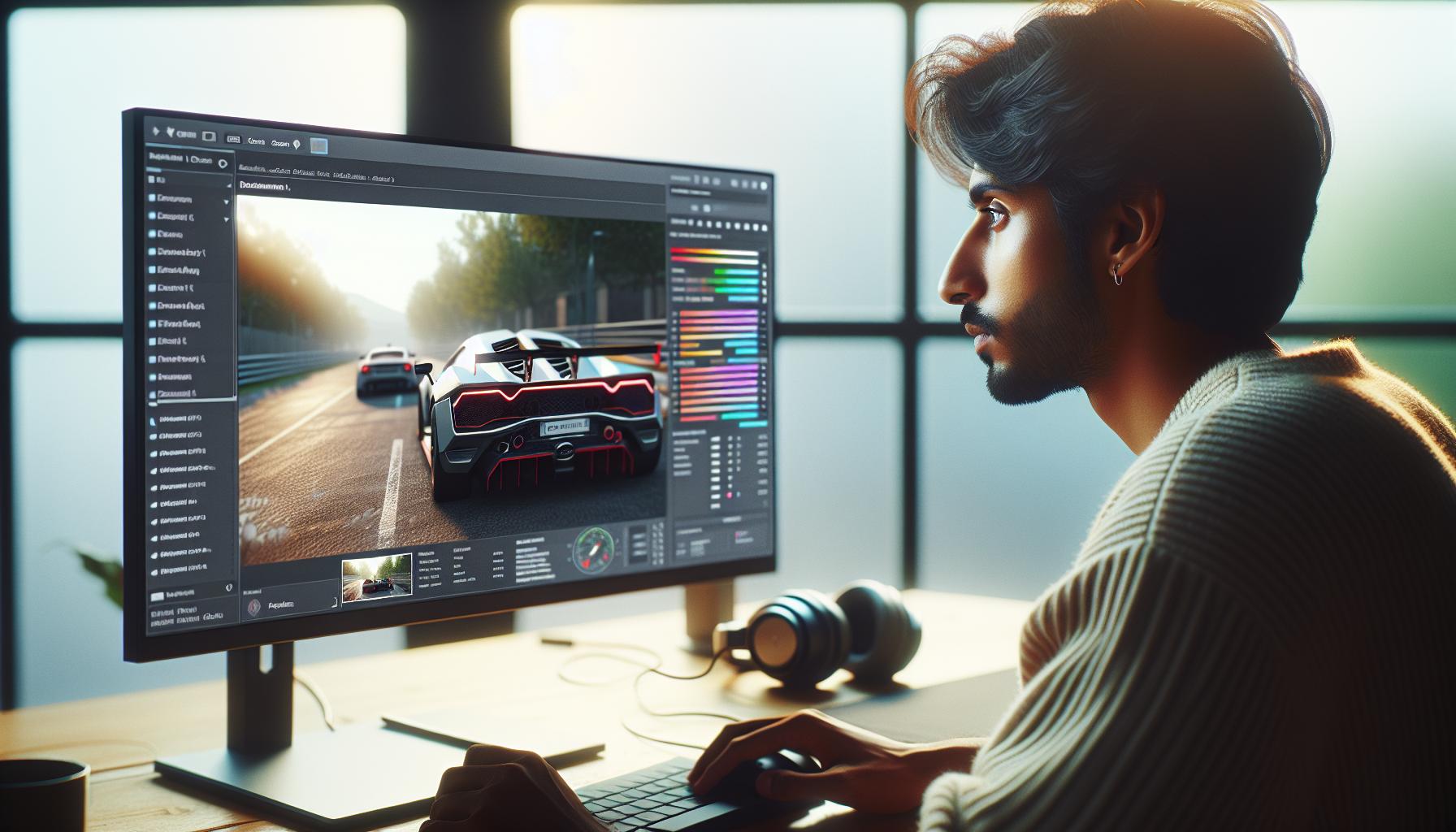
How to Diagnose My Screen Issues in AMS2
Diagnosing screen issues in AMS2 can be a crucial first step in ensuring an optimal gaming experience. From flickering screens to unusual resolutions, understanding what may be going wrong with your display can save time and frustration. To begin, it’s essential to assess your hardware specifications; make sure your graphics card and monitor are fully compatible with the game’s requirements.
Start by checking the display settings within AMS2. Sometimes, incorrect resolution settings can lead to visual issues. Navigate to the graphics settings and verify that the resolution matches your monitor’s native settings. If you’re experiencing lag or stuttering, consider adjusting the graphics quality options to see if performance improves-lowering settings like shadows and reflections can ease the load on your GPU.
Next, conclude whether the problem lies with your monitor or the game itself. Test your screen with other games or applications. If similar issues arise elsewhere, the monitor may need attention or replacement. Conversely, if AMS2 is the only game affected, it could be a software-related issue. Checking for updates to AMS2 is crucial, as patches often include fixes for display-related problems.
Lastly, ensure all drivers, especially graphics drivers, are up-to-date. Outdated drivers can cause a variety of issues from screen tearing to crashes. Use a reliable tool or the manufacturer’s website to find the latest drivers suited for your hardware. By methodically diagnosing each aspect-hardware, settings, software, and drivers-you can effectively pinpoint the source of your screen issues in AMS2, setting you on a path to a smoother and more enjoyable gaming experience.
Common Screen Problems in AMS2 and Their Solutions
Experiencing screen issues in AMS2 (Automobilista 2) can be frustrating, especially when all you want is to dive into an exhilarating racing experience. Common problems can range from flickering displays to blurriness and improper resolutions. Understanding these issues and knowing how to resolve them can significantly enhance your gaming experience.
One prevalent issue is screen flickering, which can often be triggered by a mismatch between the game’s refresh rate and the monitor settings. To address this, navigate to your monitor’s settings and ensure that the refresh rate matches the settings configured in AMS2. In many cases, adjusting the V-Sync settings within the game can also help eliminate flickering and provide a smoother gameplay experience. Additionally, if your game is running at a frame rate higher than your monitor’s refresh rate, consider enabling V-Sync or using frame rate limiters to reduce stuttering.
Another common issue is related to resolution settings. If your screen appears stretched or the game feels off, it might be due to incorrect resolution settings. Ensure that you set your game’s resolution to match your monitor’s native resolution. Access the graphics settings in AMS2 and select the correct resolution from the dropdown menu. Similarly, if the aspect ratio seems incorrect, adjusting it to match your monitor can rectify display issues.
Screen tearing, often seen when moving quickly, can be disruptive in fast-paced racing. This can typically be solved by enabling Triple Buffering along with V-Sync. Alternatively, check if your graphics card has similar settings in its control panel that can help mitigate tearing. Keeping your graphics drivers updated is also crucial to minimize such visual artifacts, as manufacturers frequently release updates that enhance performance and resolve compatibility issues.
Lastly, if you’re facing blurry images or poor clarity, it’s worth examining the anti-aliasing settings in AMS2. Increasing anti-aliasing or trying different settings can smooth out edges and improve visual fidelity. Furthermore, maintaining a clear line of sight with your display connection (HDMI, DisplayPort, etc.) and ensuring you’re using high-quality cables can also alleviate such problems.
By understanding these common problems and their straightforward solutions, players can significantly improve their racing experience in AMS2, allowing for more focus on the thrill of the race rather than technical glitches.
Step-by-Step Guide to Resetting Graphics Settings
Resetting graphics settings can be a game-changer when experiencing visual glitches or performance issues in AMS2 (Automobilista 2). Whether you’re wrestling with screen tearing, flickering, or blurriness, starting fresh with your graphics settings can help restore optimal performance and visual fidelity. Here’s how to do it methodically and effectively.
Begin by launching AMS2 and navigating to the main menu. From there, select the ‘Options’ tab. Here, you’ll find a subsection labeled ‘Graphics.’ Click on it to enter the settings where you can adjust everything related to visuals. It’s often helpful to set a baseline by first noting your current settings or taking a screenshot; this way, you can return to them if needed.
Step 1: Restore Default Settings
In the ‘Graphics’ menu, look for an option that states something along the lines of ‘Restore Defaults’ or ‘Reset to Default Settings.’ Confirm this action, as it will revert all settings to the factory defaults. This step clears out any misconfigurations that may have led to your issues.
Step 2: Adjust Display Resolution
After resetting, immediately proceed to set your display’s resolution. It’s crucial to match your monitor’s native resolution to eliminate any stretched or pixelated visuals. Navigate to the resolution dropdown menu and select the one that corresponds to your monitor’s specifications.
Step 3: Configure Refresh Rate
Next, ensure that the refresh rate is aligned with what your monitor supports. This can be done within the same graphics settings menu. If unsure, you can typically find this information in your monitor’s manual or by looking up your monitor model online.
Step 4: Fine-Tune Other Settings
Once you have the basics covered, check additional settings such as V-Sync, anti-aliasing, and graphical quality presets (low, medium, high). Test different configurations here based on your system’s capabilities. For example, enabling V-Sync can reduce tearing, while adjusting anti-aliasing can enhance image clarity.
Remember, after making adjustments, it’s advantageous to save your settings and restart the game to see the changes take effect. This simple reset process can resolve many graphic-related issues and get you back to the fast-paced racing experience you crave in AMS2. If problems persist beyond these initial troubleshooting steps, consider exploring other solutions such as updating your graphics drivers or further investigating monitor settings.
Updating Graphics Drivers for AMS2 Performance
Outdated graphics drivers can severely impact your gaming experience in AMS2 (Automobilista 2), leading to screen issues like lag, stuttering, or poor visual quality. Keeping your graphics drivers up to date not only enhances performance but also ensures compatibility with the latest game updates and optimizations. With new releases and patches, developers often improve performance or fix bugs that could be affecting your gameplay, making regular updates vitally important.
To update your graphics drivers, first identify the manufacturer of your GPU (Graphics Processing Unit). Typically, this will be either NVIDIA, AMD, or Intel. Once you know which brand you’re working with, visit their official website. Most GPU manufacturers provide easy access to driver downloads. For NVIDIA, you can use the GeForce Experience application, while AMD users can benefit from the Radeon Software Adrenalin Edition. These applications not only allow you to download updates but also provide optimal settings for your games.
Here’s a quick step-by-step to get you started:
- Check Your Current Driver Version:
– Right-click on your desktop and select either NVIDIA Control Panel or AMD Radeon Settings.
– Look for the “System Information” or “Software” section to see your current driver version.
- Download the Latest Driver:
– Go to the official website of your GPU manufacturer.
– Navigate to the driver download section and find the latest driver suitable for your graphics card model.
- Uninstall the Old Driver (Optional):
– Some prefer to uninstall the old driver before installing the new one for a clean install. You can do this through the Device Manager.
– Simply find your graphics card under “Display adapters,” right-click, and select “Uninstall device.”
- Install the New Driver:
– Run the downloaded installer and follow the prompts. Make sure to choose the “Clean Installation” option if prompted.
- Restart Your Computer:
– After installation, restart your PC to ensure all changes take effect.
By keeping your graphics drivers updated, you can eliminate many potential issues with AMS2 and enhance your overall gaming performance. This small but crucial maintenance step can lead to a smoother and visually richer racing experience, allowing you to focus on mastering your skills and enjoying the thrill of the game.
Configuring Display Settings for Optimal Gameplay
Maximizing your visual experience in AMS2 goes beyond merely updating drivers; it involves fine-tuning your display settings to suit both your hardware capabilities and personal preferences. Start by accessing the game’s graphics options from the main menu, where you will find a plethora of settings designed to enhance your experience. Understanding how each of these settings affects your performance and visuals can significantly improve your gameplay.
Key Display Settings to Adjust
Adjusting the following settings can lead to a dramatic improvement in how your game looks and runs:
- Resolution: Opt for a resolution that suits your monitor’s native specifications. Higher resolutions provide better visual fidelity but can strain your GPU, particularly if you don’t have robust hardware.
- Texture Quality: This controls the detail of surfaces within the game. Setting this too high on lower-end systems can lead to lagging, so find a balance that keeps visuals sharp without sacrificing frame rates.
- Anti-Aliasing: On its own, enabling anti-aliasing can reduce jagged edges in your game. Experiment with different types (like FXAA or MSAA) to see which gives you the best results without dropping your frame rate significantly.
- Field of View (FOV): Adjusting your FOV can alter the perception of speed and distance. A wider FOV can enhance immersion, but it may also be harder to manage if it causes distortion.
Performance versus Quality
The balance between performance and graphic quality can be elusive. If you notice frame drops, consider lowering settings that have the most significant impact. For example, shadows and reflections are typically demanding on resources. Reducing their quality can yield a noticeable improvement in performance while maintaining a visually appealing experience. Enable the in-game benchmarking tool if available, as this will give you insights into how your changes affect real-time performance, allowing for more informed adjustments.
Finally, once you find settings that suit your gameplay, take the time to save your configurations as a custom profile. This ensures you won’t have to reconfigure every time there’s an update or change in system performance. Engaging with your game’s visual settings may take a bit of effort upfront, but the rewards in immersion and enjoyment make it well worth it.
Troubleshooting Monitor Connectivity Issues
can often feel overwhelming, especially when your gameplay experience hinges on having a properly functioning display. Connectivity problems can stem from various sources, ranging from loose cables and incorrect settings to hardware malfunctions. A systematic approach can help you identify and rectify these issues effectively.
Start by examining the physical connections between your monitor and computer. Ensure that all cables-we recommend HDMI or DisplayPort for gaming-are securely plugged in both at the monitor and the graphics card. If you’re using adapters, check that they are functioning properly and compatible with your hardware. It’s also beneficial to try different cables, if available, to rule out a defective cable as the culprit.
Next, verify that your monitor is set to the correct input source. Many monitors have multiple input options, and sometimes they don’t automatically switch to the active signal. Using the monitor’s built-in menu, confirm that you have selected the input corresponding to the cable in use. If the monitor still shows a “No Signal” message, power cycle both the monitor and your computer; sometimes a simple reboot is sufficient to reconnect the hardware.
If the physical checks don’t resolve the issue, delve into your system settings. On Windows, go to Settings > System > Display and ensure that your monitor is detected. You can initiate the “Detect” function if it hasn’t been recognized automatically. Additionally, if you recently installed a graphics driver or made any system updates, it may help to roll back or reinstall those drivers to ensure they are functioning correctly.
Lastly, if the problem persists, it might be time to consult online forums and communities relevant to AMS2. These platforms can be treasure troves of shared experiences and solutions from other gamers who have encountered similar issues. Engaging with these resources not only helps you solve your immediate problem but also connects you with a support network that can be invaluable for future gaming challenges. In extreme cases, if all else fails, reaching out for professional technical support may be necessary to diagnose any hardware failures.
Utilizing AMS2 Community Forums for Support
Engaging with AMS2 community forums can significantly enhance your troubleshooting experience when facing screen issues. These platforms not only serve as a hub for shared knowledge but also create a supportive environment where gamers from all backgrounds share insights and devise solutions to common problems. Did you know that many gamers have resolved their screen issues by simply discussing their setups in these communities?
Finding the right forum is essential. You can start by browsing popular platforms like Reddit, where specific subreddits cater to AMS2 players. Here, users often share detailed posts about their experiences with screen problems and the fixes that worked for them. Engage actively by posting your issue; be sure to include detailed information about your setup and any troubleshooting steps you’ve already undertaken. This level of specificity will attract more accurate and helpful responses.
In addition to posting your questions, browsing through existing threads can be incredibly useful. Look for topics that resonate with your experience or search terms related to your screen issue, such as “screen flickering” or “display resolution problems.” You may find step-by-step guides that have helped others, ranging from quick fixes to comprehensive solutions. Participating in discussions can also lead you to discover tools or settings you never thought to explore.
Finally, don’t underestimate the power of feedback. Once you implement a solution suggested by a forum member, consider returning to the thread to share your results. This not only reinforces the community but also helps future gamers who might face similar issues. Remember, collaboration and shared experiences can transform frustrating technical challenges into learning opportunities, fostering a sense of camaraderie within the AMS2 gaming community.
Advanced Settings for Enhanced Visuals in AMS2
To truly elevate your racing experience in AMS2, diving into the advanced graphics settings can significantly enhance your visuals and overall gameplay. With a myriad of options available, making the right adjustments allows you to create an environment that not only looks stunning but also runs smoothly. This is especially crucial in a simulation game where attention to detail can make a substantial difference in both immersion and performance.
Start by exploring the Graphics Settings menu. Here, you will find options to adjust the resolution, aspect ratio, and refresh rate. It’s crucial to set these according to your monitor’s specifications to avoid any display issues. A higher resolution offers sharper images but can be taxing on your GPU; therefore, if you experience lag, consider slightly lowering the resolution or scaling settings like Anti-Aliasing and Texture Quality.
Another key feature is Resource Usage, allowing you to manage how much of your system’s graphics resources are dedicated to the game. If you’re encountering frame rate drops, adjusting the Shadow Quality and Ambient Occlusion settings can provide immediate improvements without severely impacting visual fidelity. Enabling V-Sync can also help to eliminate screen tearing, creating a smoother visual experience.
Furthermore, consider customizing the Field of View (FOV) and Camera Settings. A wider FOV can enhance your situational awareness during races, while adjusting the camera height and distance can lead to a more comfortable driving perspective. Lastly, don’t forget to tweak the Post-Processing Effects; features such as Motion Blur and Depth of Field can elevate the overall realism but should be used judiciously to maintain clarity.
By taking the time to explore these advanced settings, players can optimize the visual experience in AMS2, leading to not only improved aesthetics but also enhanced performance, creating a more engaging and enjoyable racing simulation.
Tips for Improving Frame Rates and Reducing Lag
To enhance your racing experience in AMS2, improving frame rates and reducing lag is crucial. High-performance gameplay can significantly contribute to immersion, making your sessions more enjoyable. Here are some actionable tips to achieve optimal performance and minimize disruptions during your races.
Start by adjusting the Graphics Settings. Lowering the resolution can have an immediate positive effect on frame rates. Aim for a resolution that balances visuals with performance-consider 1080p if you’re currently at a higher setting and experiencing lag. Adjust graphics quality settings such as Textures, Shadows, and Anti-Aliasing to lower levels. While you may sacrifice some detail, the increase in performance will make the game more enjoyable.
Another effective approach is to manage your system’s background processes. Close unnecessary applications running on your PC that might consume CPU and RAM resources. You can use the Task Manager to identify any resource-hungry programs that can be safely closed before launching AMS2. A clean slate ensures your game receives the most power from your hardware.
Optimizing In-Game Settings
- Enable V-Sync: This can help eliminate screen tearing and provide smoother visuals.
- Tweak Post-Processing Effects: Consider disabling or reducing effects like Motion Blur and Depth of Field, which can be taxing on resources.
- Adjust Field of View (FOV): Sometimes a wider FOV can reduce the workload on your GPU.
Lastly, keeping your drivers updated is paramount for performance. Regularly check for updates for your graphics card drivers, as manufacturers often release optimizations for specific games, including AMS2. Use trusted sources such as NVIDIA or AMD websites to find the latest drivers. After updating, do a quick restart of your computer to apply changes before starting the game.
By incorporating these strategies, you can greatly enhance your frame rates and minimize lag, ensuring a smoother and more enjoyable racing experience in AMS2. Remember, even small adjustments can make a significant difference in performance, allowing you to focus on the thrill of the race.
When to Seek Professional Technical Support
Recognizing can be a game-changer in resolving persistent screen issues in AMS2. If you’ve diligently followed troubleshooting steps, such as updating graphics drivers, modifying in-game settings, and ensuring your monitor connectivity is intact, yet your screen problems persist, it may be time to escalate the situation. These subtleties could include artifacts on-screen, frequent crashes, or serious performance issues that no amount of tweaking seems to fix.
Professional help is essential when you encounter symptoms indicating more profound hardware or compatibility issues. For instance, if you notice persistent flickering or color distortions, especially after trying different cables or ports, your GPU or monitor might require expert assessment. Similarly, if AMS2 fails to run entirely despite meeting or exceeding hardware requirements, a professional may identify underlying software conflicts, corrupted files, or problematic installations that can stall your gaming experience.
Signs It’s Time to Get Help
- Unsolvable Issues: If you’ve exhausted all online resources and community forums without success, it’s a sign.
- Frequent Crashes: If AMS2 continues to crash despite updates and settings adjustments, it may indicate deeper conflicts.
- Hardware Concerns: Strange noises from the hardware or overheating can signal issues requiring professional diagnostics.
Investing in professional technical support not only helps restore your AMS2 gaming experience but also provides you with peace of mind. Trained technicians often possess tools and expertise unavailable to the average user, enabling them to pinpoint and resolve issues quickly and efficiently. Don’t hesitate to reach out when faced with a technology puzzle that’s proven too complex to resolve on your own; it could be the key to getting back into the race without further interruptions.
User Experiences: Troubleshooting Success Stories
User experiences play a vital role in understanding how to tackle screen issues in AMS2 effectively. Many gamers have found themselves facing frustrating problems, but sharing their journeys sheds light on actionable solutions. One user, for instance, reported persistent screen flickering during gameplay, which drastically hindered the experience. After extensive troubleshooting, they discovered that a simple monitor cable swap resolved their issue entirely. This highlights the importance of checking physical connections before diving into more complex software solutions.
Another gamer shared a story about how frequent crashes interrupted their racing sessions. Despite driving through various settings adjustments, the problems persisted until they decided to engage with community forums. There, they learned about a specific graphics driver update that dramatically improved performance. By taking the initiative to not only troubleshoot individually but also seek advice from fellow gamers, they turned their AMS2 experience around. This demonstrates the value of collaboration and collective knowledge in the gaming community.
Ultimately, these success stories underline a common theme: perseverance is key. Each problem is unique, but many solutions are often just a few clicks or a new set of cables away. Gamers should remember that reaching out for help, whether through professional tech support or community forums, can lead to a resolution that not only restores the gaming experience but enhances it. Committing to a trial and error approach can also empower players to develop a deeper understanding of their systems, turning them into more adept troubleshooters in the long run.
Frequently Asked Questions
Q: How can I fix a black screen issue while playing AMS2?
A: To resolve a black screen issue in AMS2, first ensure your graphics drivers are updated. Then, check your display settings within the game and your monitor’s refresh rate settings. Finally, reset the graphics settings by navigating to the options menu and selecting ‘Reset Graphics’. This often clears misconfigurations.
Q: What should I do if AMS2 won’t launch or starts minimized?
A: If AMS2 won’t launch or opens minimized, try right-clicking the game icon and selecting ‘Run as Administrator’. Additionally, check your taskbar for the game’s icon; you may need to maximize it. If issues persist, adjust compatibility settings to ensure it aligns with your system’s specifications.
Q: Why is my FPS dropping in AMS2 after a recent update?
A: FPS drops in AMS2 post-update may be due to new graphics settings or unoptimized drivers. First, revert to previous settings if possible, then update your graphics drivers. Also, adjust in-game graphical settings to lower levels to improve performance until further updates are released.
Q: Where can I find AMS2 mods to improve graphics?
A: AMS2 community forums and websites like RaceDepartment are excellent sources for mods that enhance graphics. Simply search for AMS2 graphics mods, then download and follow installation instructions provided by the creators to ensure compatibility with your version of the game.
Q: How do I check my computer’s specs for AMS2 compatibility?
A: To check your computer’s specifications for AMS2 compatibility, right-click on ‘This PC’ and select ‘Properties’. Here, you’ll find information about your processor, RAM, and graphics card. Compare these specs against AMS2’s system requirements to ensure compatibility.
Q: What can I do if AMS2 displays graphical glitches?
A: Graphical glitches in AMS2 can often be fixed by updating your graphics drivers and ensuring your game files are intact. Validate the game files through Steam or your game launcher, and try lowering graphics settings to see if this resolves the issue.
Q: Is there a way to optimize AMS2 for racing wheel and VR setups?
A: Yes, for optimizing AMS2 with racing wheels and VR, access the control settings to ensure your wheel is properly calibrated. For VR, adjust in-game settings for resolution and refresh rate to match your headset’s specifications for an optimal experience.
Q: How do I enable full-screen mode in AMS2?
A: To enable full-screen mode in AMS2, go to the graphics settings menu. Look for ‘Display Mode’ and switch it from ‘Windowed’ or ‘Borderless’ to ‘Full Screen’. Save your settings and restart the game to apply the changes.
These questions and answers provide actionable insights and maintain relevance to the topic of getting your screen working in AMS2, thereby enhancing user engagement and search engine visibility. For more tips, feel free to explore our sections on troubleshooting and community support within AMS2.
Future Outlook
Now that you’ve learned how to troubleshoot your screen issues in AMS2, don’t let technical hiccups hold you back from your gaming experience. Remember, the steps outlined here are just the beginning. If you’re still facing challenges, explore our comprehensive guides on common gaming issues or tips for optimizing your setup for peak performance. Click here to check out our detailed article on enhancing your gaming experience with the right tech setups.
Take action now-head over to our resource section, where you can discover tools and tutorials designed to elevate your gaming. If you found this guide helpful, consider signing up for our newsletter to keep updated with the latest tips and insider tricks. Your journey to seamless gaming starts today; let’s tackle those challenges together! Feel free to leave a comment below if you have questions or share your own tips; we love hearing from our community!