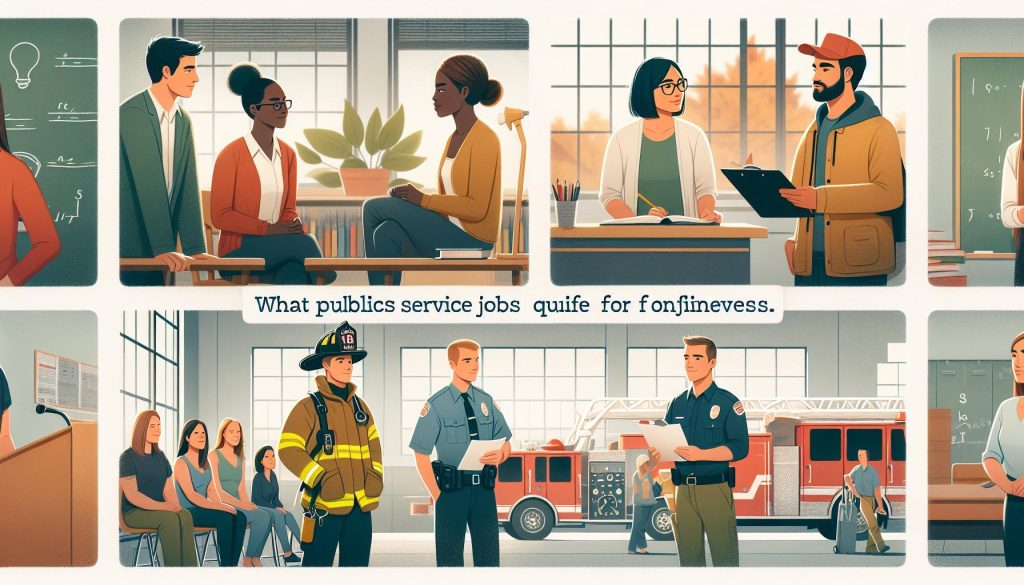
Did you know that certain public service jobs can qualify you for federal student loan forgiveness? This valuable opportunity not only eases the financial burden of education but also allows you to contribute positively to your community. Understanding the specific roles that meet these criteria is essential for students seeking to align their career aspirations with financial relief. Whether you’re considering a role in public health, education, or governmental services, the impact of your work can extend beyond your paycheck-helping you achieve both professional growth and personal satisfaction. Curious about which job paths could lead to loan forgiveness and how you can navigate this process? Let’s explore the rewarding world of public service careers together, and discover how you can pave the way for a brighter future while serving your community.
Understanding Student Loan Forgiveness Programs
Many students and recent graduates have the potential to significantly reduce their financial burden through various student loan forgiveness programs tied to public service. Engaging in a career that serves the community can open pathways not only for a fulfilling job but also critical loan relief opportunities. Programs such as the Public Service Loan Forgiveness (PSLF) allow individuals who work full-time in qualifying public service roles to have their federal Direct Loans forgiven after making 120 qualifying monthly payments under a qualifying repayment plan.
Understanding your options is essential. Public service jobs encompass a wide range of positions across government, non-profits, and certain private sector roles that provide services to the public. Common examples include educators, healthcare workers, social workers, and non-profit employees. These positions not only help you pay off your student loans but also contribute to meaningful societal impact. Organizations often seek motivated individuals who are passionate about public service, making these roles highly rewarding both personally and professionally.
To maximize your chances of qualifying for loan forgiveness, ensure you understand the specific eligibility criteria. You’ll need to be employed by a qualifying employer and enrolled in an appropriate repayment plan, typically one that requires income-driven payments. Keeping meticulous records of your employment and payment history is vital. This documentation could prove invaluable if questions about your qualifications arise in the future.
As you embark on your journey to find a public service job, consider seeking internships or volunteer opportunities in relevant fields. These experiences can enhance your resume and provide essential networking opportunities. Additionally, balance your academic commitments with part-time work that furthers your career goals. In doing so, you can build the experience that not only qualifies you for loan forgiveness programs but also sets the foundation for a successful career dedicated to public service.
Eligibility Requirements for Public Service Jobs
Public service jobs offer not just the opportunity to make a difference in your community, but also the potential for significant financial relief through student loan forgiveness programs. To qualify for programs such as Public Service Loan Forgiveness (PSLF), understanding the eligibility requirements is crucial. Specifically, you must be employed by a qualifying employer and work in a designated public service role. This includes positions with government organizations at any level-federal, state, local, or tribal-as well as non-profit organizations that are tax-exempt under Section 501(c)(3) of the Internal Revenue Code. Certain other non-profit organizations may also qualify if they provide a qualifying public service.
Your employment must be full-time, which generally means you work at least 30 hours a week, or are considered a full-time employee by your employer. As you choose your career path, consider roles that align closely with fields recognized for their impact, such as education, health care, public interest law, or social services. Additionally, second jobs or part-time employment in these sectors can also contribute toward your loan forgiveness, provided they meet specific guidelines.
Keep in mind that simply being in a public service job isn’t enough. You must also make 120 qualifying monthly payments under a qualifying repayment plan. Typically, this means being in an income-driven repayment plan that adjusts your payments based on your income and family size. Documenting your employment and payment records is essential, as you’ll need to provide proof to ensure you meet the qualification criteria for forgiveness.
To maximize your chances of finding a qualifying public service job, consider these steps:
- Research: Explore the different types of public service roles available and identify which align with your skills and interests.
- Internships and Volunteer Work: Gain experience and make connections. Internships, volunteer opportunities, and part-time jobs in public service can enhance your resume.
- Networking: Attend events, join relevant organizations, and connect with professionals in the field to learn more about potential job openings.
- Application Materials: Ensure your resume and cover letter highlight your commitment to public service and relevant experience. Tailor your application to reflect the mission of the organization.
Balancing work and academic pressures is challenging, but by strategically applying for roles that meet the eligibility criteria for loan forgiveness, you position yourself for a fulfilling career while alleviating financial stress. Empower yourself with the knowledge of these requirements, and let them guide your career journey toward meaningful public service.
Quality Work Experience: What Counts?
Securing student loan forgiveness through public service jobs requires more than simply taking a position; it demands a clear understanding of what qualifies as quality work experience. Not every role in the public sector will count towards your goal of forgiveness, so it’s essential to identify positions that align with the requirements of programs like the Public Service Loan Forgiveness (PSLF). These positions typically involve full-time employment (defined as at least 30 hours a week) at an eligible employer, which includes federal, state, local, tribal government, and non-profit organizations recognized under Section 501(c)(3) of the Internal Revenue Code.
When evaluating what constitutes quality work experience, think broadly about the different sectors that support public welfare. Fields such as education, healthcare, and public interest law are prominent examples where positions play a significant role in community service. However, positions in social work, environmental advocacy, and community organizing also fit the bill. It’s important to note that while full-time roles are more beneficial, part-time positions can also contribute if they adhere to specific guidelines-such as working multiple part-time roles with a combined total of at least 30 hours per week.
Getting Practical Experience
Consider ways to enhance your experience in public service. Participating in internships or volunteer work not only adds to your resume but also exposes you to various roles that facilitate networking opportunities and practical skill development. Engaging in volunteer work with organizations that have a mission aligned with public welfare can often lead to potential job openings.
Application Strategies
When applying for such positions, tailor your application materials to highlight relevant skills and experiences. Here are some actionable steps:
- Resume Building: Focus on showcasing any public service-related experience, even if it’s unpaid. Use quantifiable achievements and emphasize your commitment to community service.
- Interview Preparation: Prepare to discuss how your experiences align with the organization’s mission. Don’t hesitate to share personal stories that reflect your dedication to public service.
- Networking: Attend career fairs, workshops, and industry-specific events to connect with professionals who can guide you or inform you about job openings.
In a rapidly changing job market, those willing to explore diverse opportunities in public service while emphasizing their strengths and dedication can not only advance their career but also achieve significant financial relief through student loan forgiveness. Balancing work, academics, and personal life is a challenge, but with strategic planning and a commitment to making a difference, you can successfully navigate this journey while building a fulfilling career.
Top Public Service Careers for Loan Forgiveness
Choosing a career in public service not only allows you to make a meaningful difference in your community but can also provide significant financial relief through student loan forgiveness programs. Various positions qualify under the Public Service Loan Forgiveness (PSLF) program, enabling you to align your passion for helping others with a pathway to eliminate your student debt. From educators to healthcare professionals, there are several rewarding career avenues available that fulfill the criteria necessary for forgiveness.
One of the most recognized public service careers is that of a teacher, especially in low-income areas. Teachers working in high-need schools can qualify for PSLF, making education a noble and financially savvy choice. Additionally, healthcare roles, such as nurses and mental health professionals, play a crucial part in enhancing community well-being and can also benefit from loan forgiveness. Moreover, social workers, particularly those involved in child welfare or community health, have opportunities to secure loan relief while significantly impacting vulnerable populations.
Transitioning into these fields can start even before you graduate. Consider engaging in internships or part-time roles related to your desired profession. Volunteering for organizations focused on public service not only enhances your resume but also provides invaluable networking opportunities. For example, working as a volunteer coordinator at a non-profit can expose you to operations and management roles, laying solid groundwork for a career in public service.
To navigate the application process effectively, it’s important to tailor your resume and prepare for interviews by highlighting your dedication to community service. Showcasing relevant experiences, whether through coursework, internships, or volunteer work, can set you apart. Utilize career fairs and networking events to connect with professionals in your field of interest, as this can lead to job opportunities that meet PSLF criteria. Balancing work, academics, and personal life can be challenging, but with strategic planning and a commitment to your career goals, you can forge a successful path in public service while achieving financial freedom through student loan forgiveness.
How to Apply for Student Loan Forgiveness
Navigating the maze of student loan forgiveness can feel overwhelming, but understanding how to apply for these essential programs can pave your way toward financial freedom. If you’re working in public service and aspire to have your student loans forgiven, starting the application process is your first step. The Public Service Loan Forgiveness (PSLF) program is not only about eligibility; it requires careful planning and documentation.
To begin, assess whether your employment qualifies under PSLF. Generally, full-time positions in government organizations, non-profit agencies, and certain education or health care fields qualify. Once you’ve confirmed your employment status, the following steps can guide you through applying effectively:
Steps to Apply for Student Loan Forgiveness
- Complete the Employment Certification Form: This form confirms your employment and ensures that your loans qualify for PSLF. It’s crucial to submit this form annually or whenever you change employers.
- Make Payments: You need to make 120 qualifying monthly payments under a qualifying repayment plan while working in a qualifying job. Ensure you maintain records of these payments diligently.
- Choose the Right Repayment Plan: Only certain repayment plans qualify for PSLF, including Income-Driven Repayment (IDR) plans. Evaluate these options carefully to ensure you’re on the right path.
- Submit the PSLF Application: After making 120 qualifying payments, submit your PSLF application. Be thorough in completing it and double-check that all pertinent documentation is submitted.
It’s also indispensable to stay organized throughout the process. Create a dedicated folder for all relevant documents, including pay stubs, loan statements, and correspondence from your loan servicer. This not only aids in the application process but also serves as a backup in case of future inquiries or complications.
In the competitive landscape of public service careers, gaining relevant experience can also enhance your application standing. Consider part-time roles, internships, or volunteer positions in public service. These not only bolster your resume but also align perfectly with the qualifications required for loan forgiveness programs. Maintain a balance between your professional aspirations and academic responsibilities, ensuring that you set the foundation for a successful career while effectively managing student loans. As you dive into this journey, remember that your dedication to service is not only enriching your career but also crucial in achieving substantial financial relief through loan forgiveness.
Mistakes to Avoid in Your Application
Navigating the intricacies of student loan forgiveness can be a life-changing journey, but it’s easy to stumble along the way. One common pitfall is failing to fully understand the specific requirements for qualifying employment. Many applicants assume that any public service job counts toward the Public Service Loan Forgiveness (PSLF) program, but that’s not the case. It’s essential to ensure that your position falls under a qualifying employer, which typically includes government organizations and non-profit entities that provide a public service. Always double-check the eligibility criteria, and don’t hesitate to reach out to your loan servicer for confirmation if you’re unsure.
Another frequent mistake is neglecting the timely completion and submission of the Employment Certification Form. This form is vital as it confirms your employment and ensures your loans are tracked for PSLF. It’s crucial to submit this form annually or whenever your employment changes. Keeping your records accurate and up to date can make a significant difference down the line. Mistakes on this form, such as incorrect dates or job descriptions, can lead to delays or even disqualification during the forgiveness application process.
Additionally, many forget to keep meticulous records of their qualifying payments. It’s not simply about making monthly payments; they must be made on time and under a qualifying repayment plan. A handy tip is to set reminders for when payments are due and to keep pay stubs or bank statements as proof. Consider using a dedicated folder-either physical or digital-to store all documentation relevant to your employment and payments. This organizational strategy can make the submission of your PSLF application smoother and help avoid potential headaches later on.
As you pursue public service opportunities, balance between academics and work can be challenging, but remember that every step toward gaining relevant experience counts. Internships, part-time roles, and volunteer positions can not only enrich your resume but also align perfectly with your long-term career goals while helping you manage student loans. Embrace every opportunity as a stepping stone toward financial relief through loan forgiveness.
Impact of Employment Type on Forgiveness
Understanding the significance of employment type can be the key that unlocks student loan forgiveness options available through programs like Public Service Loan Forgiveness (PSLF). Not every job you hold in the public service sector will count towards the required employment criteria for loan forgiveness, so knowing which roles qualify is essential. For instance, positions in government organizations, non-profit entities, and certain types of educational and health services are typically eligible. This means that whether you’re a full-time employee or working part-time, your role can positively impact your journey toward financial relief.
Fortunately, there are a variety of employment arrangements that can qualify for forgiveness. Part-time jobs, internships, and even freelance opportunities can all meet the necessary criteria, as long as they align with the eligibility requirements set by the PSLF program. For example:
- Part-Time Employment: If your part-time role is with a qualifying employer, it may accumulate qualifying payments towards PSLF.
- Internships: Both paid and unpaid internships in public service jobs can count, provided they are with an eligible organization.
- Freelance Work: In some cases, if you provide services to a qualifying organization on a contract basis, the time worked may qualify, assuming you adhere to specified guidelines.
To maximize the benefits of your employment type, keep a record of your employment history and ensure to submit the Employment Certification Form to confirm your qualifying roles regularly. It’s also wise to engage with your loan servicer to clarify any uncertainties regarding your job’s eligibility. Remember, every hour you invest in a qualifying position is a step toward diminishing your financial burden!
Balancing work with academic responsibilities can seem daunting, but numerous flexible arrangements are available. Seek roles that offer part-time or remote opportunities, allowing you to gain valuable experience without compromising your studies. By strategically positioning yourself within the public service sector, you’ll be setting the foundation for a fulfilling career, all while working toward the ultimate goal of loan forgiveness. Aim high-your dedication can transform your financial future!
Tracking and Documenting Qualifying Payments
Staying organized is incredibly crucial when working towards the goal of student loan forgiveness, particularly under programs like Public Service Loan Forgiveness (PSLF). Every qualifying payment you make brings you one step closer to potentially having your student loans forgiven, making it essential to meticulously track and document your qualifying payments. This proactive approach not only reassures you of your progress but also prevents potential roadblocks or inaccuracies in the future.
Begin by maintaining a dedicated binder or digital folder where you can store all relevant documents. This may include pay stubs, tax documents, and any letters or notifications from your loan servicer. One of the most important forms to keep track of is the Employment Certification Form (ECF), which ensures that your employment qualifies for PSLF. This form should be submitted periodically-ideally, every year or whenever you change employers-to confirm that you are making qualifying payments based on your verified employment. Remember to document the timeframes of your employment and the number of hours you worked, as this information is vital when calculating your qualifying payments.
Utilizing Technology for Tracking
In today’s digital age, leveraging technology can significantly streamline the tracking process. Consider using budgeting and tracking apps that allow you to monitor your payments and employment details automatically. Many apps offer features that enable you to add notes about your jobs or payments directly, making it easier to compile your information when it’s time to submit your ECF. Additionally, set reminders on your calendar for when to check in with your loan servicer and ensure that everything is on track.
Maintaining Open Communication
Communication is key. Regularly engage with your loan servicer, especially if you notice discrepancies in your payment history or if you are ever unsure about your employment’s qualifying status. Transparency helps ensure that both you and your servicer are on the same page, leading to a smoother path toward forgiveness. Remember, the PSLF program is designed to support you, and being proactive in maintaining your payment records contributes significantly to your success.
A diligent approach to tracking and documenting your qualifying payments can empower you in your journey toward financial freedom. While balancing schoolwork with your career might seem challenging, effective organization and clear communication can help you navigate this path with confidence. Your commitment to your career and perseverance in managing your finances will open doors to a brighter future, where burdensome loan balances become a thing of the past.
State-Specific Public Service Job Opportunities
Discovering public service job opportunities specific to your state can be a game-changer in your journey towards student loan forgiveness. Many positions not only align with your career goals but also qualify you for the essential benefits of programs like Public Service Loan Forgiveness (PSLF). Exploring local options that contribute to your community can help you balance your academic efforts with meaningful work while making strides towards financial relief from your student loans.
State governments often have a range of public service roles available in various sectors, such as education, healthcare, and public administration. For example, you might consider looking for opportunities as a teacher in public schools, a social worker, or even positions in local government agencies. Many states also offer internship programs specifically designed for students pursuing careers in public service. These internships can provide valuable experience, making your resume more appealing to future employers while contributing towards qualifying employment for PSLF.
Here are a few practical strategies to uncover public service job opportunities in your state:
- Check State Websites: Many states have dedicated resources for job seekers, including listings of available positions in public service. Websites like state government portals or local educational institutions often provide comprehensive job boards.
- Network with Local Organizations: Engage with community organizations such as non-profits and advocacy groups that focus on education, health, and social services. They may have job postings or can connect you with hiring managers.
- Attend Career Fairs: University career fairs are excellent networking opportunities where you can meet representatives from public service organizations. Prepare your resume and practice your pitch to make a great impression.
- Utilize Online Job Platforms: Websites like LinkedIn and Indeed allow you to filter job searches specifically for public service roles, and many users share insights about their experiences working in these positions.
Applying for these roles requires a thoughtful approach to your resume and cover letter. Tailor your materials to highlight relevant skills and experiences that make you a strong candidate for public service work, such as any volunteer work, part-time positions, or relevant coursework. Additionally, practicing for interviews will help you communicate your passion for serving the community effectively, increasing your chances of landing a qualified position that aligns with PSLF requirements.
Balancing your academic commitments with a rewarding job in public service may seem challenging, but take it step by step. Prioritize time management strategies, such as creating a weekly schedule that accommodates both study time and work hours. Remember, the journey to loan forgiveness is also about personal and professional growth, and each step you take can open new doors for your future career and financial independence.
Resources for Student Loan Forgiveness Guidance
Navigating the complex landscape of student loan forgiveness can be challenging, especially when you’re determined to find a public service job that qualifies for such programs. Fortunately, a wealth of resources is available to guide you through this journey. Utilizing these resources can help you understand the nuances of eligibility, provide valuable job leads, and equip you with the necessary tools to succeed in applications and interviews.
Start by diving into government resources dedicated to student loan forgiveness. Websites like the U.S. Department of Education’s Federal Student Aid page provide comprehensive information about programs such as Public Service Loan Forgiveness (PSLF), including eligibility requirements and application procedures [[3]]. Likewise, the Consumer Financial Protection Bureau offers guidance that outlines various loan forgiveness options, ensuring you understand how to navigate the application process effectively [[2]].
Networking is equally crucial, especially in public service sectors. Engage with local non-profits and public organizations that align with your career interests. Many provide job boards, internship opportunities, and mentorship programs. Career centers at colleges are also valuable, offering resume workshops and interview preparation tailored to public service roles. Connecting with alumni in public service careers can provide insights into the types of positions available and their paths to securing forgiveness benefits.
As you pursue these opportunities, don’t underestimate the power of online platforms. Job search engines such as LinkedIn and Indeed allow you to filter specifically for public service positions, while forums and discussion groups can connect you with peers who share similar goals. Remember that each application is not just a step toward employment but also a strategic move toward achieving your long-term student loan forgiveness goals. Balancing job searches with academic responsibilities requires effective time management; consider using tools like digital planners to prioritize tasks and maintain a healthy work-life balance as you navigate your path in public service.
By actively utilizing these resources, you position yourself not just for immediate job opportunities but also for a fulfilling career that contributes to your community and helps alleviate the burden of student debt.
Exploring Alternative Repayment Plans
Navigating your student loan repayment options is crucial, especially when considering how public service employment can lead to forgiveness. While some may aim for the Public Service Loan Forgiveness (PSLF) program, there are alternative repayment plans that can provide substantial financial relief while you work toward qualifying for forgiveness. Understanding these options allows you to make strategic choices that can ease your financial burden.
One of the more popular alternatives is the Income-Driven Repayment (IDR) plans. These plans adjust your monthly payments based on your income and family size, making them more manageable, especially for those just starting their careers in public service. There are four main types of IDR plans:
- Revised Pay As You Earn (REPAYE): Caps payments at 10% of your discretionary income and forgives any remaining balance after 20 or 25 years, depending on if the loans were for undergraduate or graduate studies.
- Pay As You Earn (PAYE): Similar to REPAYE, but only for borrowers with newer loans and typically capped at 20 years until forgiveness.
- Income-Based Repayment (IBR): Payments can be as low as 10% of discretionary income for newer borrowers, with forgiveness after 20 or 25 years.
- Income-Contingent Repayment (ICR): This plan is unique in that it allows for payments based on your income, but they can be higher than other IDR options.
When you choose an IDR plan, the time spent in repayment counts toward the 120 qualifying payments required for forgiveness under PSLF. This means that while you’re working in a qualifying public service job, your reduced payments not only help ease your immediate financial strain but also bring you closer to potential loan forgiveness.
However, it’s essential to stay organized and informed. Make sure to track your payments and keep documentation of your employment in a public service role; this will simplify the process when applying for forgiveness. Additionally, consider speaking with a financial advisor or using resources from the Federal Student Aid website, which provides tools to help understand repayment options and their long-term impacts on your financial health.
Choosing the right repayment plan can feel overwhelming, but with dedication and the right information, you can find a solution that supports both your career development and financial well-being. Balancing your job search with academic responsibilities can be challenging, but taking proactive steps towards understanding your repayment options can pave the way for a successful career in public service and a manageable approach to handling your student loans.
Success Stories: Real-Life Forgiveness Experiences
Success can often feel elusive, especially when burdened with student loans. However, for many individuals in public service roles, the path to forgiveness can transform financial anxiety into liberation. Take, for instance, Sarah, a social worker who dedicated her career to helping underprivileged communities. After fulfilling her commitment in a qualifying role for over ten years, she applied for the Public Service Loan Forgiveness (PSLF) program. The relief she felt upon receiving that forgiveness letter-confirming the cancellation of over $60,000 in student loans-was monumental. She emphasizes the importance of consistent documentation and tracking payments throughout her career, stating, “The process can seem daunting, but staying organized made all the difference.”
Building on Sarah’s experience, consider Jason, a middle school teacher who also benefited from PSLF. He started his teaching career with a job that paid modestly but was deeply fulfilling. His dedication to teaching led him to enroll in the Income-Driven Repayment (IDR) plan, which adjusted his payments according to his income. Over time, these strategic decisions not only made his financial obligations manageable while supporting his passion for education but ultimately led him to receive a complete forgiveness of his federal student loans after ten years of service. He advises, “Staying informed about your loans and options can lead to long-term savings and success-don’t hesitate to seek help when needed.”
While personal stories of success like Sarah’s and Jason’s can inspire, it’s crucial for prospective borrowers to understand the variety of public service jobs qualifying for loan forgiveness. Positions in education, healthcare, non-profit organizations, and government typically meet the criteria. Engaging in internships or volunteer work in these fields while studying can also serve as stepping stones toward permanent roles that offer the benefits of loan forgiveness.
For those ready to take the leap into qualifying public service jobs, there are pragmatic steps to follow:
- Identify Your Interests: Choose a field that resonates with your passions and academic background.
- Network: Connect with professionals in your desired career path to gain insight and potential job leads.
- Start Small: Consider part-time roles or internships that align with public service, building experience while you study.
- Stay Informed: Regularly check in on PSLF and IDR program updates to fully take advantage of the latest policies.
These real-life narratives and actionable steps reveal that success in securing loan forgiveness is attainable. Encourage yourself to remain steadfast in your career choices, as the rewards not only alleviate financial stress but also contribute meaningfully to society. Embrace the journey, knowing that each effort brings you closer to both personal and professional fulfillment.
FAQ
Q: What types of jobs qualify for public service loan forgiveness?
A: Public service loan forgiveness qualifies jobs in federal, state, local, or tribal government roles, as well as non-profit organizations. This includes positions in education, public health, law enforcement, and social work. Check the specific eligibility per your position to ensure compliance.
Q: How long do I need to work in public service to qualify for loan forgiveness?
A: You must work full-time in a qualifying public service position for at least 10 years to be eligible for loan forgiveness under the PSLF program. It’s important to ensure that your payments are made on time and while enrolled in a qualifying repayment plan.
Q: Do part-time public service jobs qualify for loan forgiveness?
A: Yes, part-time positions can qualify for loan forgiveness if you work for a total of at least 30 hours a week across qualifying employers. Ensure you document your work diligently to meet eligibility requirements.
Q: Are there specific forms I need to submit for public service job qualifications?
A: Yes, completing the Employment Certification Form (ECF) is essential. This document verifies your employment and is necessary for tracking qualifying payments. Submit it annually or whenever you switch jobs to maintain a proper record.
Q: How can I prove that my job qualifies for student loan forgiveness?
A: To prove your job qualifies, gather pay stubs, tax documents, and an Employment Certification Form that outlines your job role. Make sure that your employer is approved under the PSLF program and retain all relevant documentation for potential audits.
Q: Can I receive student loan forgiveness if I change employers?
A: Yes, you can still qualify for student loan forgiveness after changing employers, as long as your new position is in a qualifying public service role. Remember to submit the Employment Certification Form for your new job to track eligibility.
Q: What happens if my public service job is eliminated?
A: If your public service job is eliminated, you can still qualify for forgiveness based on prior qualifying employment as long as you reach the ten-year service requirement. Consider applying for similar roles to complete the required time frame.
Q: Does volunteering in public service count towards loan forgiveness?
A: Unfortunately, volunteering does not count towards student loan forgiveness. Only paid, qualifying positions at government and non-profit organizations are eligible. However, volunteering can enhance your resume and may provide useful networking opportunities.
Concluding Remarks
Navigating your path to student loan forgiveness through public service jobs can be transformative. By understanding the specific roles that qualify, you can not only make a difference in your community but also relieve some of the financial burden of your education. Don’t wait-explore the job opportunities available in the public service sector today. Check out our guides on crafting an impactful resume and mastering interview techniques to put your best foot forward.
Ready to take the next step? Subscribe to our newsletter for the latest updates on job openings and tips for securing your dream position in public service. Your journey towards a fulfilling career while securing loan forgiveness starts here! For further resources, visit our pages on flexible job options for students or discover how internships can lead to impactful careers. Join the conversation and share your thoughts in the comments-your future in public service awaits!